
Top Media Agencies in Nebraska, Kansas & Iowa for Video & Photo
Why the wrong media partner costs more than the right one
When you're hiring a video production company or commercial photographer, the price tag isn't the most expensive part of the decision. The expensive part is hiring someone who doesn't get your business — and producing assets you can't actually use.
We see this all the time. A national chain delivers a deck of slick shots with no story behind them. A freelancer with a great Instagram can't keep up when the project scales. A regional agency takes the brief, runs it through a template, and hands back something that could've been made for any client in any industry.
The Midwest market — Omaha, Lincoln, Kansas City, Des Moines, and out into Iowa — has plenty of capable shops. But "capable" isn't the bar. The bar is "right for this brand, this story, this deliverable." Here's what to look for.
1. Specialization over generalism
Generalists shoot weddings on Saturday and corporate videos on Tuesday. Specialists do corporate video and commercial photography full-time, and you can tell from the work. When you scan a portfolio, ask: do these projects look like ours, or do they look like a mix of everything? Brands and agencies that work with specialists get sharper concepting, faster turnarounds, and crews who already speak the industry language — manufacturing, healthcare, finance, ag, B2B services.
2. A real production process — not just a shot list
Strong partners run a defined process: strategy and goals first, then pre-production planning (mood boards, storyboards, location scouting, casting), then a tight production day, then post (editing, color, sound, motion graphics), then delivery in the formats your channels actually need. When a partner can walk you through that process before you sign, you're going to have a smoother project. When they can't, expect surprises.
3. Industry experience that matches yours
Healthcare and finance shoots have compliance considerations. Manufacturing shoots happen in active facilities with safety protocols. B2B testimonials require talent-release paperwork. Ag and outdoor shoots depend on weather windows and drone permissions. Ask for two or three projects in your industry — not a portfolio of "things that look like yours."
4. Equipment that fits the deliverable
You don't need 6K cameras and helicopter drones for a LinkedIn explainer. You do need professional lighting, broadcast-grade audio, and stabilization for almost anything that's going on a screen larger than a phone. A good partner matches the kit to the project, not the project to the kit. If a vendor is leading with gear specs in their pitch, ask what gear they'd recommend for your project — and why.
5. Clear deliverables and revision policies — in writing
The most common reason video and photo projects go sideways isn't quality. It's misaligned expectations about what gets delivered, in what formats, with how many rounds of revisions, and on what timeline. A reputable partner lays this out before the shoot, not after. Look for: deliverable list with file specs, number of included revisions, what counts as a "new" project versus a revision, and rush-fee triggers.
6. Usage rights you actually understand
Footage and stills carry usage rights. Some partners license; some transfer ownership; some retain rights to re-use in their own portfolio. None of these is automatically wrong — but you need to know which you're getting. Ask: who owns the raw files, who owns the final deliverables, can we re-cut, can we use this in paid ads, and for how long. Get the answers in the contract.
7. A strategic point of view, not just an order-taker
The cheapest partner is the one who does exactly what you say. That's also the most expensive partner if "what you say" isn't quite right. Look for a team that pushes back constructively — challenges the brief, suggests sharper angles, brings ideas you wouldn't have brought yourself. A strategic partner will save you from a forgettable deliverable; an order-taker will deliver one.
Full-service vs. specialized: which fits
Question | Full-service agency | Specialized agency |
|---|---|---|
Need video + photo + post in one shoot? | Yes — they coordinate it | You'd hire separately |
Have a specific need (e.g., aerial only)? | Often overkill | Better fit |
Want a single strategic partner for ongoing content? | Yes — relationship builds | Project-by-project |
Want bundled pricing? | Common | Less common |
Need flexibility to pick a different vendor next time? | Harder to switch | Easier |
There's no universally right answer — there's the right answer for the project in front of you.
How Creative Olsen approaches this
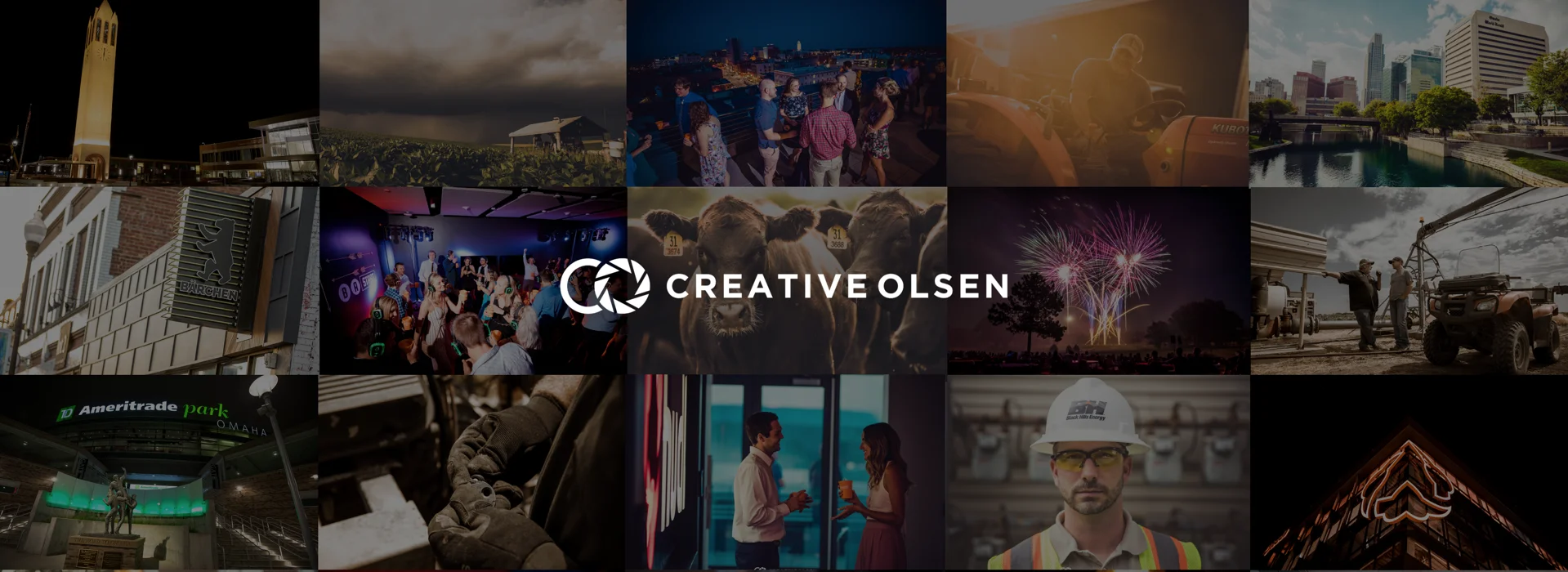
We're a Midwest-based video production and commercial photography company built around the principles above. We work primarily with brands and agencies across Nebraska, Kansas, Iowa, Missouri, and South Dakota. We specialize in brand films, corporate event coverage, commercial photography, drone work, and testimonial production — and we say no to projects that aren't a fit, because that's how partnerships stay good.
If you're planning a project and want a straight conversation about whether we're the right partner, start with a discovery call — no pitch deck, just a conversation about what you're trying to make and whether we're the right team to make it.
FAQ
How much does video production cost in the Midwest? Project-dependent. Single-day brand video shoots typically start in the low five figures; multi-day campaigns with full pre-production, casting, and complex post-production climb from there. Subscription-style content programs exist for ongoing needs. Get itemized quotes from two or three partners and compare like-for-like — total deliverable count, revision rounds, usage rights, and crew size are where the real differences live.
How long does a typical project take? From kickoff to final deliverable: 2 to 4 weeks for a focused single-shoot project, longer for multi-location campaigns or anything with extensive post (3D animation, complex graphics, voiceover talent). Pre-production usually takes longer than people expect — that's where the project gets de-risked.
What's the most common mistake when hiring a media partner? Skipping the strategy conversation and going straight to "send me a quote." A reputable partner won't quote a project they don't understand, and a quote you receive without that conversation is going to be either way over- or under-scoped. Always have the strategic conversation first.
Conclusion
The Midwest doesn't lack capable video and photo partners. What it lacks — and what your project needs — is a partner who matches your industry, your timeline, your usage needs, and your strategic taste. The seven criteria above will get you to a yes/no faster than another hour of portfolio-scrolling.
If we can help with that decision — whether you end up hiring us or not — we'd be glad to.


